How to Pack Dishes and Fragile Items Like a Pro

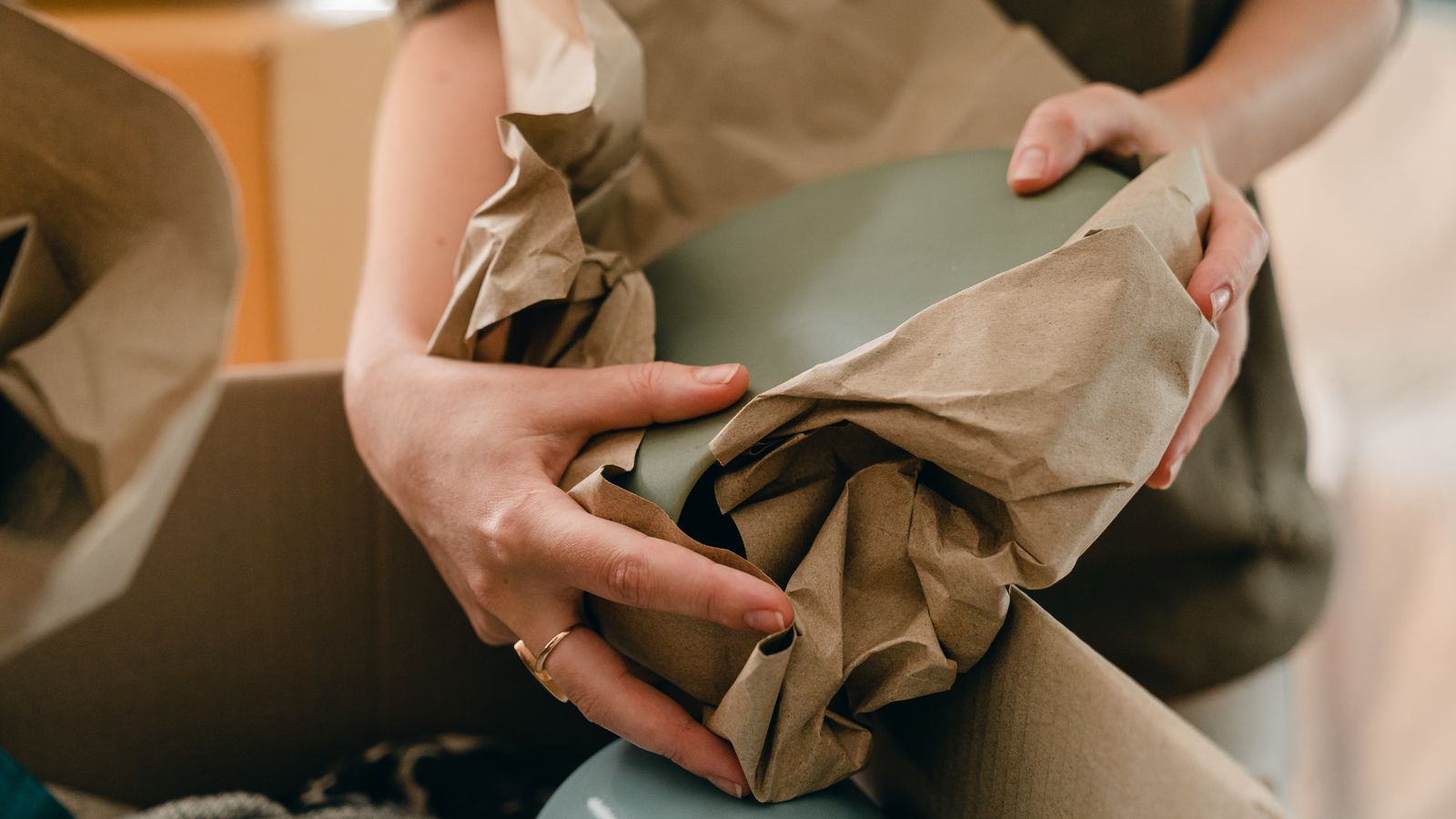
Broken dishes are the most common moving damage – and the most preventable. Here is how professional packers do it, step by step.
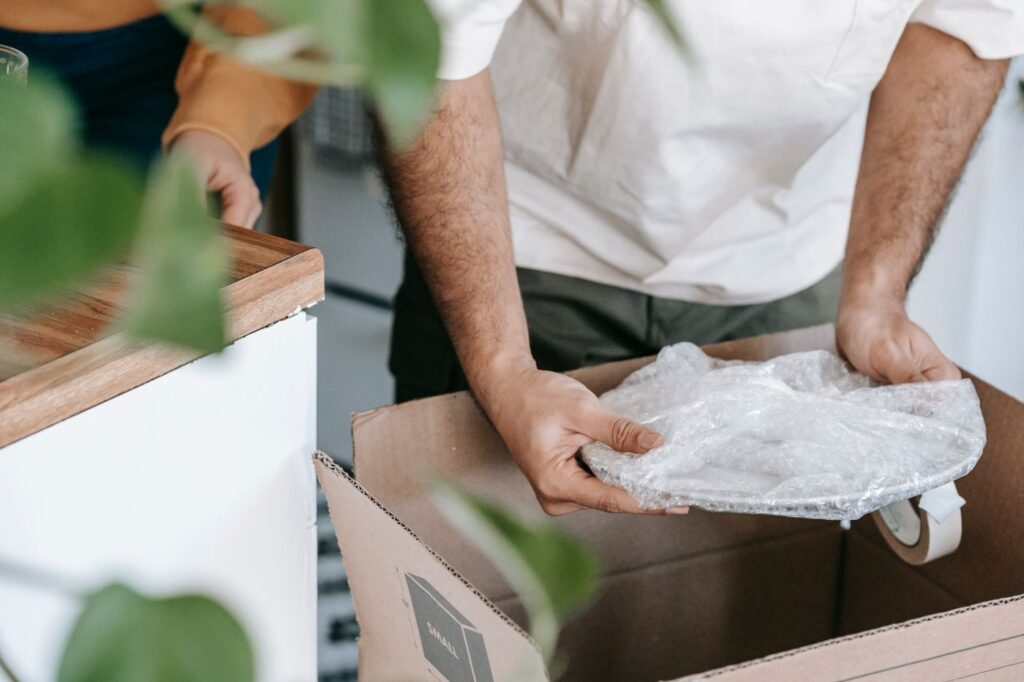
Get the right materials
You need sturdy small-to-medium boxes (large boxes and heavy china are a bad combination), packing paper, tape and a marker. Newspaper works in a pinch but ink can transfer to dishes. For glasses, cell dividers are worth every dollar.
Build a padded base
Crumple several sheets of paper into a 2-3 inch cushion at the bottom of the box. This layer absorbs the shocks of the truck ride – never skip it.
Wrap plates the right way
Wrap each plate individually in paper, then pack plates on their edge, vertically, like records – never flat. A stack of flat plates concentrates all the weight on the bottom one; plates on edge distribute pressure and survive almost anything.
Glasses and stemware
Stuff each glass with crumpled paper, then wrap it. Heaviest items go at the bottom of the box, stemware on top. Fill every gap with paper – if you hear rattling when you shake the box gently, it is not done.
Label and stack smart
Mark the box FRAGILE on at least two sides plus the top, and write which room it goes to. Never stack heavy boxes on fragile ones in the truck or at home.
When to let pros handle it
A full kitchen takes an experienced packer 2-3 hours and an amateur most of a day. If your schedule is tight, partial packing help – just the kitchen and fragile items – is a popular middle option. It is billed at the same hourly rate as the move itself. Ask us about packing help when you request a quote.